
Phase Changes of Matter
What Are Phase Changes?
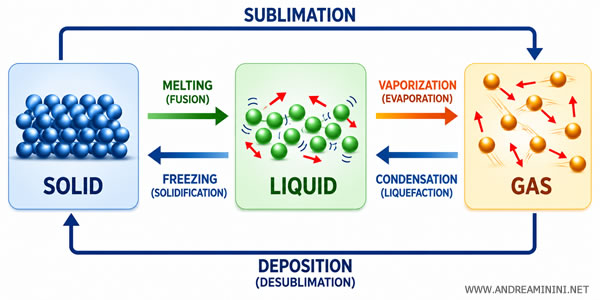
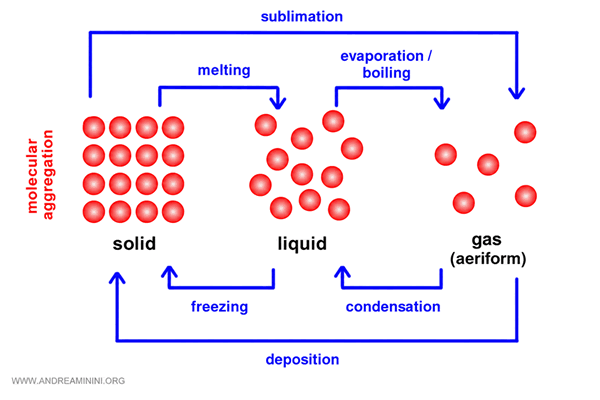
A phase change, also known as a change of state, is the physical transformation of a substance from one state of matter to another. For example, a solid can become a liquid, a liquid can become a gas, or a gas can return to a liquid or solid state.
Phase changes occur because variations in temperature and pressure alter the way molecules interact with one another. The most common phase changes are described below.
Melting
Melting is the phase transition in which a solid turns into a liquid. Every substance has a characteristic temperature at which this process takes place.
This temperature is called the melting point. It is not always the same because it depends on the surrounding pressure.
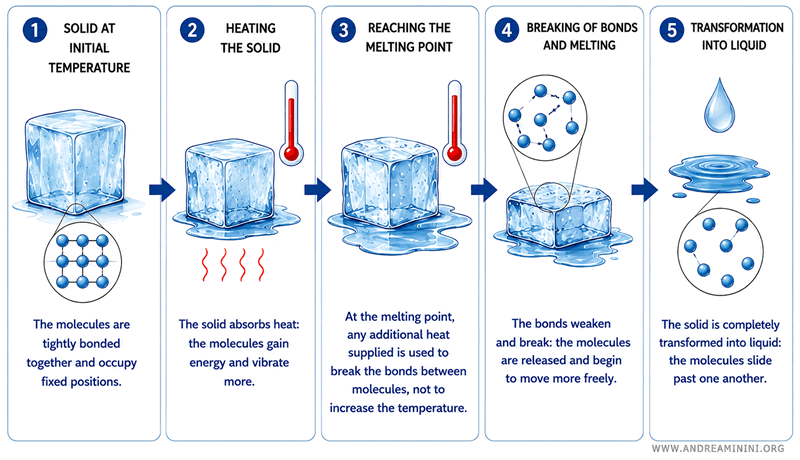
For most substances, the melting point increases as pressure increases. Water is one of the best-known exceptions to this rule.
Example. As pressure increases, the melting point of ice decreases slightly. Most substances behave in the opposite way. For instance, the melting point of many metals increases as pressure rises.
Freezing
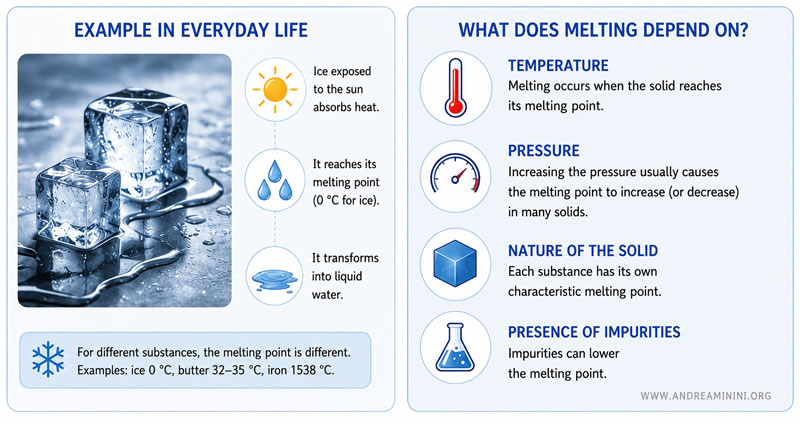
Freezing is the phase transition in which a liquid becomes a solid. It is the reverse of melting.
At a given pressure, every substance has a characteristic freezing point.
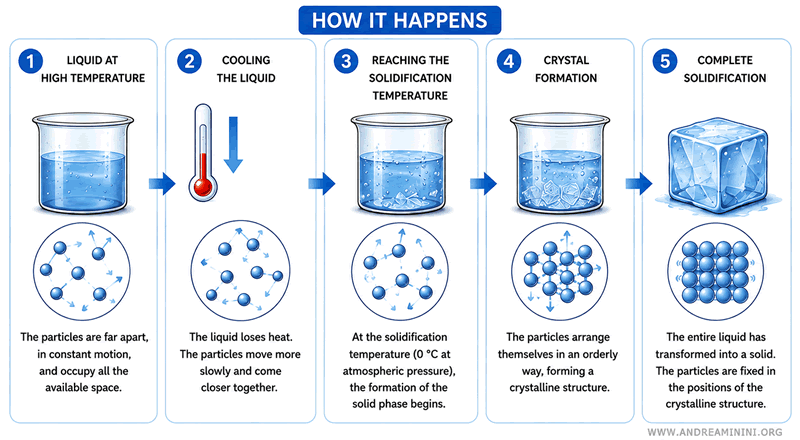
Note. The freezing point and the melting point are the same temperature. They describe the equilibrium between the solid and liquid phases, viewed from opposite directions.
Liquefaction
Liquefaction is the phase transition in which a gas is converted into a liquid. This occurs when the gas is cooled, compressed, or subjected to both processes at the same time.
Every gas has its own characteristic liquefaction temperature.
Pressure has a significant effect on liquefaction. In general, increasing the pressure allows a gas to liquefy at a higher temperature.
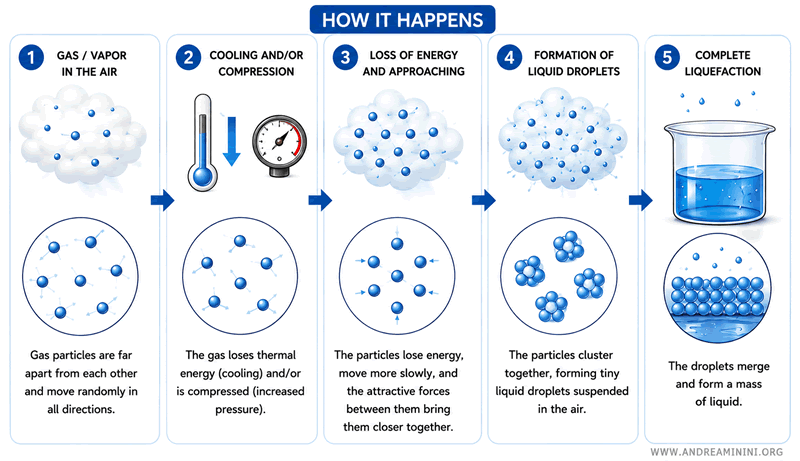
Note. In industrial applications, gases are often liquefied by increasing the pressure inside a container or system. This makes the transition to the liquid state easier to achieve.
Condensation
Condensation is the phase transition in which a vapor changes into a liquid. While it is closely related to liquefaction, the term condensation is usually used when discussing vapors, especially water vapor.
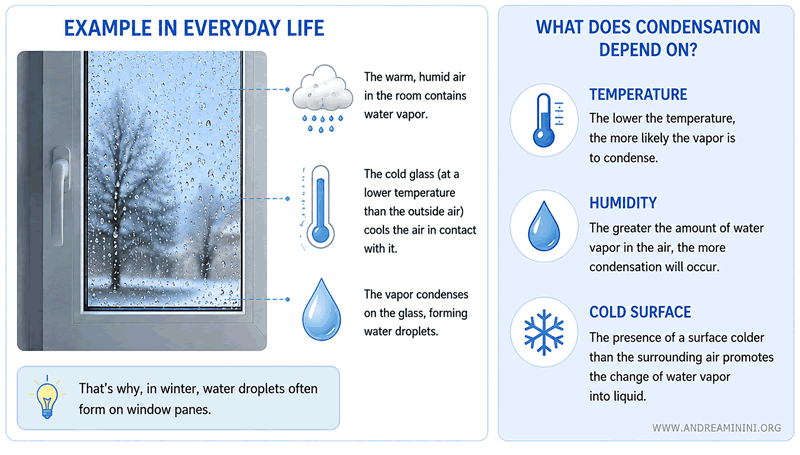
Example. In clouds, water vapor condenses into tiny liquid droplets as the air cools. The same process occurs indoors when warm, humid air comes into contact with a cold window. As the vapor cools, it condenses into liquid water on the glass surface.
Boiling
Boiling is the phase transition in which a liquid changes into vapor throughout its entire volume.
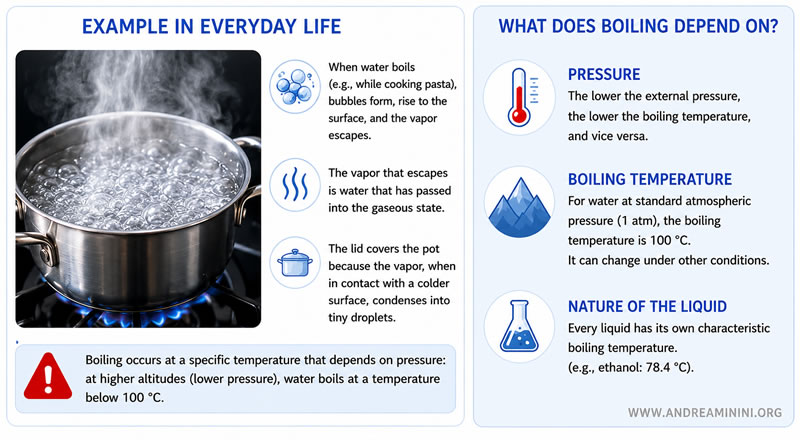
Every substance has a characteristic boiling point at a given pressure.
The boiling point increases as pressure increases and decreases as pressure decreases. This is why water boils at a lower temperature at high altitudes, where atmospheric pressure is lower.
Evaporation
Evaporation is the transition from the liquid state to the vapor state that occurs only at the surface of a liquid.
Unlike boiling, evaporation can occur at any temperature. However, its rate depends on several factors, including temperature, pressure, humidity, and air circulation.
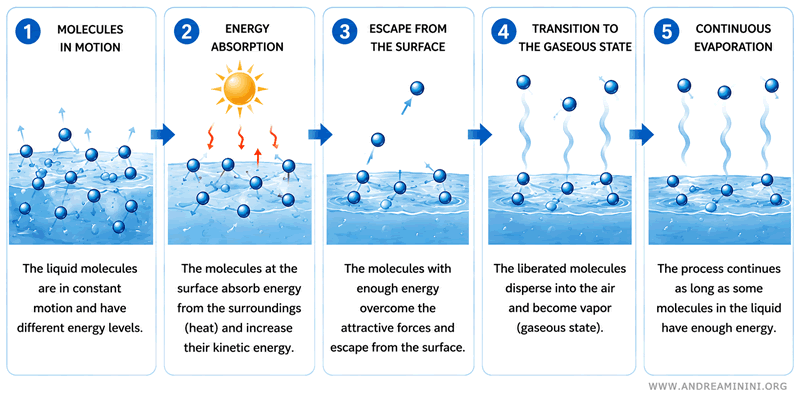
Example. Seawater evaporates continuously from the ocean surface throughout the day. The process becomes faster during the warmest hours, when more molecules have enough energy to escape into the air.
Sublimation
Sublimation is the direct phase transition from the solid state to the gaseous state.
Because the liquid phase is bypassed entirely, sublimation is considered a direct phase change.
Note. The reverse process, in which a gas changes directly into a solid, is called deposition. In some scientific texts, it may also be referred to as desublimation.
Why Does Pressure Affect Phase Changes?
Phase changes occur because molecules can arrange themselves in different ways depending on the conditions around them.
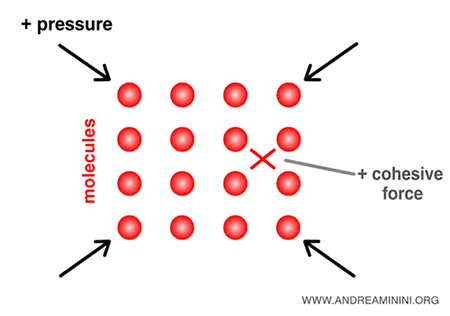
Pressure tends to push molecules closer together. As a result, it generally favors denser states of matter, such as liquids over gases and solids over liquids.
This is why increasing pressure usually makes it easier to liquefy a gas or solidify a liquid. The molecules are forced into closer contact, making intermolecular attractions more effective.
Conversely, when pressure decreases, less dense states become more favorable. Under these conditions, processes such as evaporation tend to occur more readily because molecules can separate from one another more easily.


