Mechanics in Physics
What Does Mechanics Study?
Mechanics is the branch of physics that explores how objects move, why they move, and under what conditions they remain at rest. It provides the foundation for understanding everything from a falling apple to the motion of planets and spacecraft.
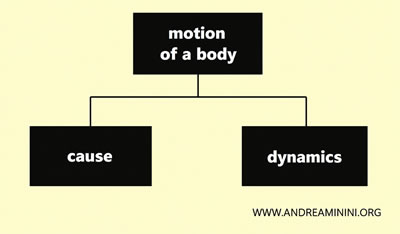
Traditionally, mechanics is divided into three main branches:
- Kinematics
Kinematics describes motion without considering the forces that cause it. - Dynamics
Dynamics examines the relationship between motion and the forces responsible for it. - Statics
Statics focuses on the conditions that allow bodies to remain in equilibrium.
Before describing the motion of any object, it is necessary to define a frame of reference.
The position, velocity, and acceleration of a body can appear different depending on the observer and the chosen frame of reference. For this reason, every analysis of motion begins by establishing a coordinate system.
Point Particle Motion
One of the simplest models used in mechanics is point particle motion. In this model, an object is represented as a point particle, an idealized body that has mass but no physical size.
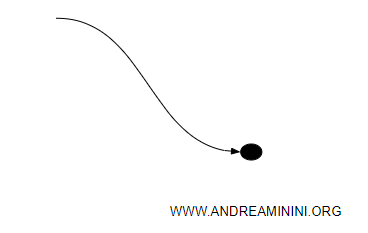
Why Is Point Particle Motion Important?
Mechanics is usually introduced through point particle motion because it allows the fundamental principles of motion to be studied without the additional complexity associated with extended bodies.
Although simplified, this model provides the basis for many of the concepts used throughout classical mechanics.
Note. The point particle model is also used to approximate the motion of real objects whose dimensions are negligible compared with the distances involved in a particular problem. While this is only an approximation, it is often remarkably accurate. In reality, the motion of a physical body rarely matches that of a perfect point particle. When every point of a body undergoes the same displacement at the same time, the motion is known as translational motion, or simply a translation.
Within a given frame of reference, a point particle occupies a specific position in space.
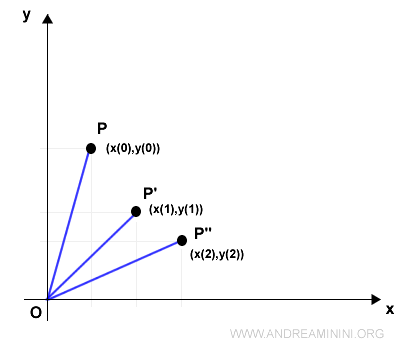
As the particle moves, its position changes over time and is identified by the coordinates (x,y,z).
Example
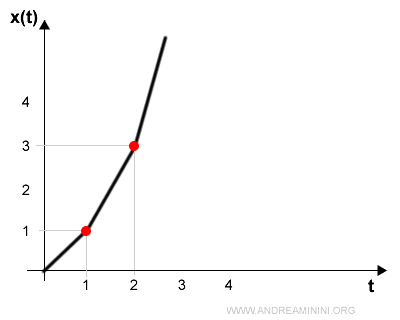
In a one-dimensional reference frame, the position of a particle along a line is described by the coordinate x(t).
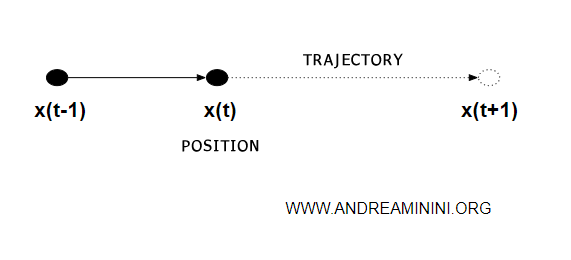
The function that specifies the position of a particle as a function of time is called the equation of motion.
Velocity measures how quickly a particle's position changes with time. In its simplest form, velocity is defined as the distance traveled divided by the elapsed time.
Acceleration describes how velocity changes over time. It is one of the most important quantities in mechanics because it directly reflects the effects of forces.
A motion is said to be uniform when the velocity remains constant.
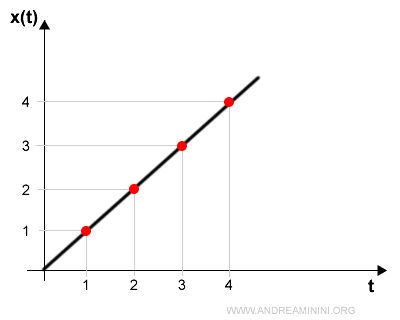
A motion is said to be accelerated when the velocity changes over time.
Many physical quantities in mechanics, including displacement, velocity, acceleration, and force, are represented by vectors, quantities that possess magnitude, direction, and orientation.
Representing the Motion of a Particle
There are several ways to represent motion graphically.
In a two-dimensional Cartesian coordinate system, motion in a plane can be decomposed into two component motions, one along the x-axis and the other along the y-axis.
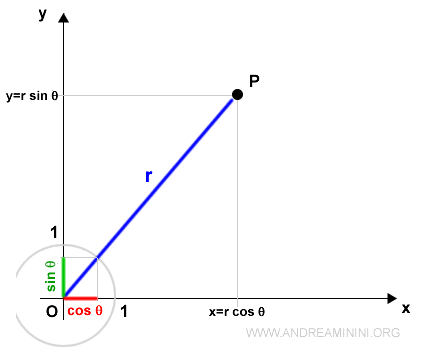
Polar Coordinates. In a polar coordinate system, the position of a point in a plane is specified by the radial distance $ r $ and the angle $ \theta $. The corresponding Cartesian coordinates can be obtained using the relations $ x=r \cdot \cos \theta $ and $ y=r \cdot \sin \theta $.
Motion can also be analyzed in terms of its trajectory.
The trajectory is the path traced by a particle as it moves through space over time. It consists of all the positions occupied by the particle during its motion.
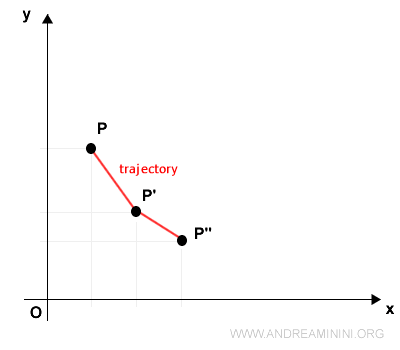
It is important not to confuse trajectory with displacement. Displacement depends only on the initial and final positions of the particle, whereas the trajectory describes the entire path followed between those points.
Types of Motion
Motion can be classified according to the shape of its trajectory or according to how its velocity changes over time.
- Uniform Rectilinear Motion
- Uniformly Accelerated Rectilinear Motion
- Uniform Circular Motion
- Uniformly Accelerated Circular Motion
- Projectile Motion
- Simple Harmonic Motion
These are just a few examples of the many types of motion studied in mechanics. Together, they provide the foundation for understanding how objects behave in the physical world.