Types of Elementary Particles
In physics, elementary particles fall into three main families: hadrons, leptons, and force carriers.
Note. Leptons and force carriers are also considered fundamental particles because, unlike hadrons, they are not composed of smaller constituents.
Hadrons
Hadrons are among the most massive and complex subatomic particles. Familiar examples include the proton and neutron.
These particles interact via the strong nuclear force, which binds quarks together within atomic nuclei.
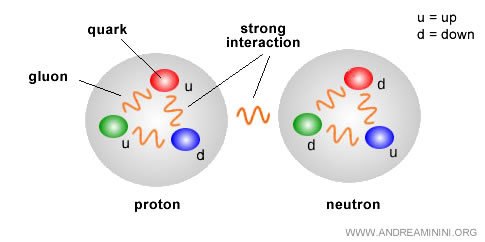
Hadrons are not fundamental because they are composite particles - made up of quarks. Depending on the type, they consist of either two or three quarks.
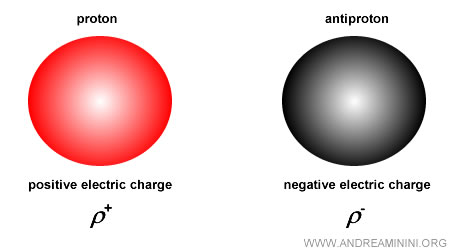
Each hadron also has a corresponding antiparticle, identical in mass but opposite in charge or other quantum numbers.
Hadrons are divided into two subcategories: mesons and baryons.
A] Mesons
The term “meson” originally referred to their intermediate mass - lighter than protons but heavier than electrons.
Mesons are made of two quarks: specifically, one quark and one antiquark. They are the lighter members of the hadron family.
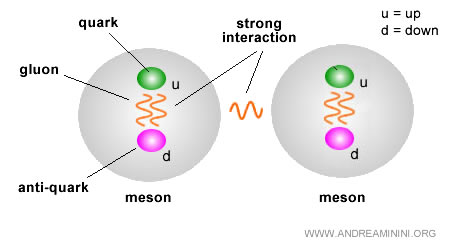
Note. The quark and antiquark in a meson do not need to have the same flavor; for example, a meson might contain an up quark and a strange antiquark. However, to be color-neutral, the pair must carry opposite color charges - such as green and antigreen, or red and antired.
The main types of mesons include:
- Pion
- Kaon
- Eta

B] Baryons
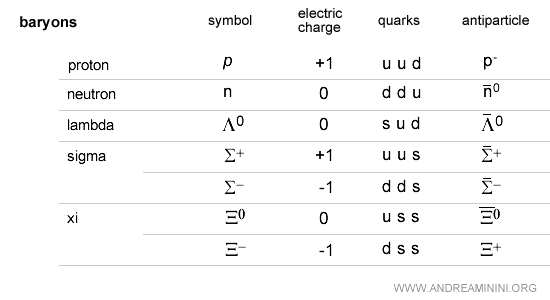
Baryons are the heaviest hadrons. This category includes the nucleons - protons and neutrons - as well as several other heavier particles.
All baryons are made of three quarks, bound together by the strong interaction.
The following particles are classified as baryons:
- Proton
- Neutron
- Lambda
- Sigma
- Xi
Leptons
Leptons are much lighter than hadrons and include some of the most fundamental particles in nature. They participate in the weak nuclear and electromagnetic interactions.
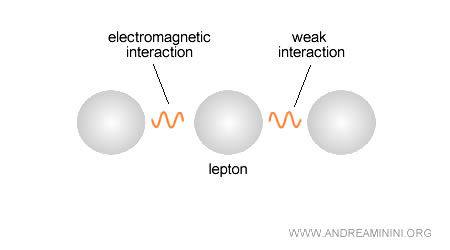
Leptons are fundamental particles - they have no internal structure and are not composed of quarks. As far as current experimental evidence shows, they are truly indivisible.
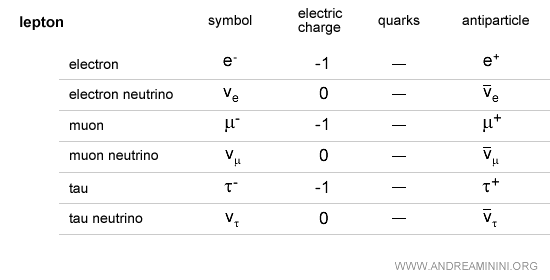
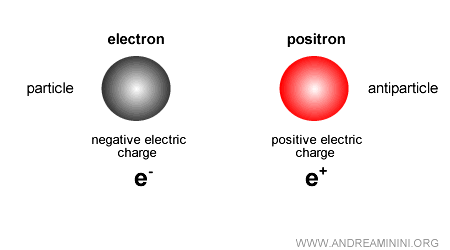
Each lepton has a corresponding antiparticle, part of the family of antimatter.
The lepton family includes the following elementary particles:
- Electron
- Neutrino
- Muon
- Tau
Force Carriers
These particles are much smaller than hadrons and leptons and play a very different role in particle physics.
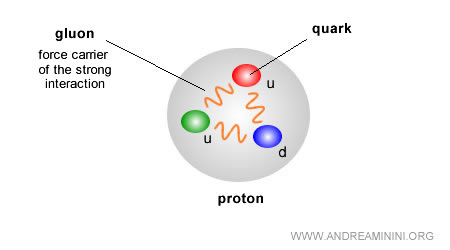
Force carriers - also known as gauge bosons or interaction mediators - are responsible for transmitting the fundamental forces of nature.
Note. According to quantum field theory, each of the four fundamental forces - strong, weak, electromagnetic, and gravitational - is mediated by the exchange of a specific type of carrier particle.
The gluon, for example, mediates the strong interaction that holds quarks together inside hadrons.
Meanwhile, the W and Z bosons mediate the weak nuclear force, which allows a neutron to convert into a proton via beta decay, emitting an electron and an antineutrino - or the reverse process.
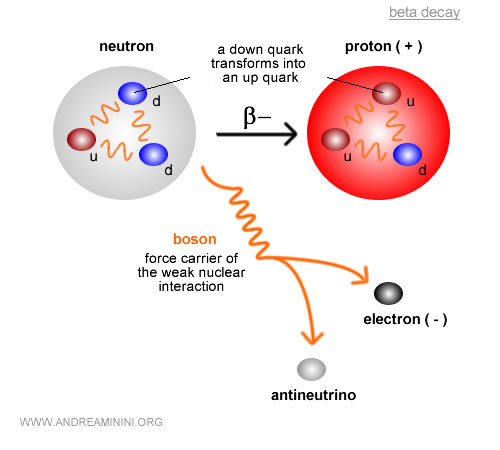
Force carriers are fundamental particles as well, since they are indivisible and not composed of quarks. Unlike other particles, they do not have corresponding antiparticles.
The Four Fundamental Forces and Their Mediators
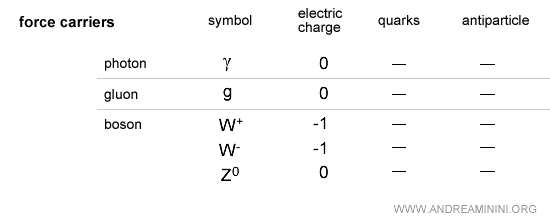
The mediators of the four fundamental interactions are:
- Photon - carrier of the electromagnetic force
- Gluon - carrier of the strong nuclear force
- W and Z Bosons - carriers of the weak nuclear force
- Graviton - hypothetical carrier of the gravitational force